
Workers’ Compensation Insurance Florida: Comprehensive Coverage, Benefits, and Employer Requirements
Workers’ compensation insurance in Florida is the state-mandated safety net that pays for medical care, wage replacement, rehabilitation services, and survivor benefits when employees are injured or fall ill on the job. This guide explains how Florida workers’ compensation works, who must carry coverage, the benefits provided, and the practical steps employers and employees must follow after an injury. Small businesses and independent contractors often face uncertainty about obligations and options; understanding statutes, claims processes, and cost drivers reduces legal and financial exposure while improving recovery outcomes. Throughout this article we cover employer requirements, coverage components, the claims workflow, cost-management strategies, and options tailored to sole proprietors and micro-businesses in Florida. Where helpful, we also note how Amerus Insurance Group—a Lakeland-based lead-generation and information hub that lists Workers Comp under its business insurance services—can simplify choices through advisor-led guidance and coordinated insurance planning. After reading, you will have clear action steps for compliance, claims, and cost control tied to Florida statutes and common industry practices.
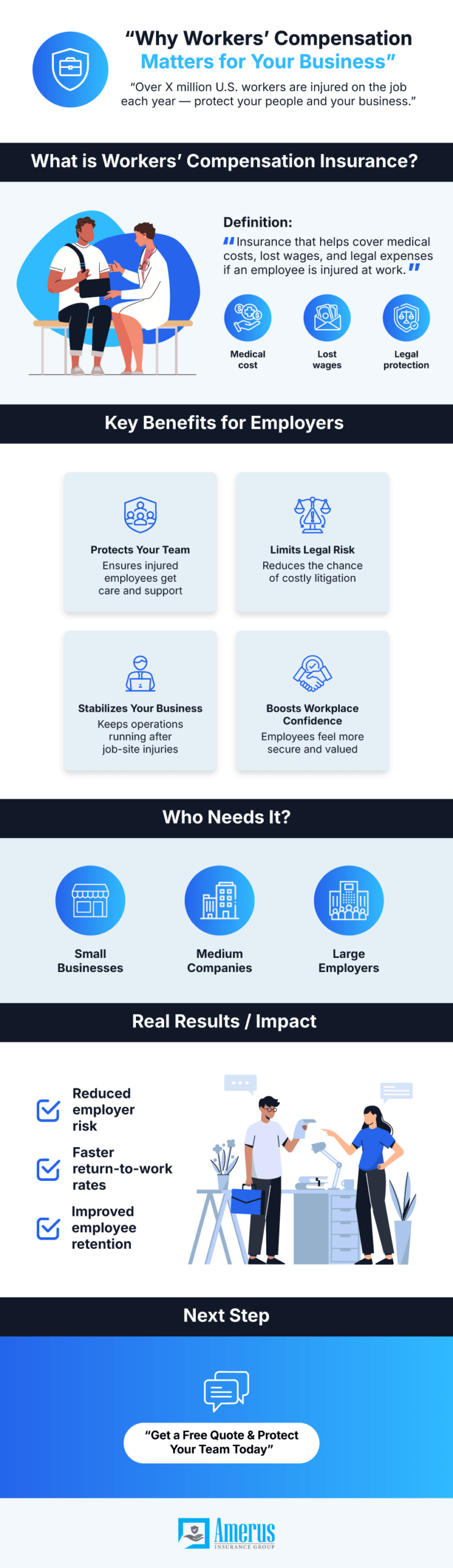
What Are Florida Workers’ Compensation Insurance Requirements for Employers?
Florida employers with one or more covered employees must carry workers’ compensation insurance based on industry type: construction employers with one or more employees must have coverage, non‑construction employers must have coverage if they have four or more employees, and agricultural employers must have coverage if they have six or more regular employees or 12 or more seasonal workers. Employers who are out‑of‑state but have employees working in Florida must also secure Florida‑compliant coverage.
Florida Department of Financial Services — Coverage Requirements; official state workers’ compensation coverage rules.
Florida law requires many employers to maintain workers’ compensation insurance to protect employees from work-related injuries and occupational diseases, and to limit employer liability for medical and wage claims. The requirement arises from employer status rather than a single universal payroll threshold, and exceptions apply for certain corporate officers, sole proprietors, and independent contractors when properly classified. Employers must also post official workplace notices, file employer reports when claims occur, and cooperate with medical and investigative processes; failure to comply can trigger administrative actions from the Florida Department of Financial Services and civil exposure. Understanding which businesses fall inside the mandate reduces the risk of fines and stop-work orders while ensuring injured workers receive timely benefits.
Who Must Carry Workers’ Comp Coverage in Florida?
Most employers who regularly employ one or more employees must carry workers’ compensation insurance, with specific rules that vary by industry and employment type. Construction, hospitality, agriculture, healthcare, and transportation sectors often have strict coverage norms because of higher injury risk, while corporate structures and volunteer arrangements can create exceptions that depend on statutory definitions. Employers should verify classification with the Florida Department of Financial Services and consult their carrier or advisor to confirm coverage requirements based on payroll, the nature of work, and whether workers are classified as employees or bona fide independent contractors. Proper classification prevents uninsured exposure and clarifies when voluntary coverage or endorsements are a prudent choice for atypical arrangements.
What Are the Penalties for Non-Compliance with Florida Workers’ Comp Laws?
Penalties for failing to maintain required workers’ compensation coverage in Florida include civil fines, assessments for unpaid benefits, stop-work orders, and potential bond or criminal exposure in egregious cases, and these actions can follow an investigation by state regulators. Beyond administrative penalties, employers face increased liability because workers may sue for negligence if benefits are unavailable, resulting in uncapped tort exposure and legal costs that exceed insurance premiums. Employers found non-compliant typically must immediately secure coverage, pay assessed fines, and cooperate with claims administration to remediate the violation; employers should also implement corrective payroll and classification audits to avoid repeat violations. Proactive compliance measures reduce regulatory risk and protect both employer assets and employee recovery.
What Does Workers’ Compensation Insurance Cover in Florida?
Florida law requires most employers to purchase workers’ compensation insurance that provides benefits for occupational injuries or illnesses and generally makes employers immune from certain injury lawsuits, with the focus on medical care, wage benefits, disability, and death benefits for covered employees.
Florida Office of Insurance Regulation — Florida Workers’ Compensation Insurance; overview of required coverage and benefits.

Workers’ compensation insurance in Florida covers medical treatment, wage replacement for lost earnings, temporary and permanent disability benefits, rehabilitation services, and death or survivor benefits, structured to address the financial and medical needs of injured workers. Coverage focuses on reasonable and necessary medical care related to the workplace injury, income support during recovery based on the worker’s average weekly wage, vocational rehabilitation when appropriate, and funeral or survivor benefits in fatal cases. Understanding the benefit categories and how each is triggered helps employers plan return-to-work policies and helps employees know their entitlements after an incident. Below is an entity–attribute–value table that summarizes the main benefit types, who qualifies, and typical coverage parameters under Florida rules to make comparisons clear.
Which Medical Expenses Are Covered Under Florida Workers’ Comp?
Medical benefits cover emergency treatment, diagnostic testing, specialist care, surgical procedures, prescription medications, and authorized rehabilitation services when they are necessary to treat a work-related injury or occupational disease. The insurer or managed care network typically authorizes treatment pathways, and employers should ensure injured workers are directed to approved providers to avoid disputes about compensability or payment. Provider selection, prior authorization for certain procedures, and documentation of work-related causation all determine how quickly medical care is approved and paid. Clear communication between employer, carrier, treating physician, and the Florida DFS expedites care and supports better recovery outcomes for the employee.
How Are Lost Wages and Disability Benefits Calculated?

Lost wage benefits in Florida are calculated from the injured worker’s average weekly wage, using statutory formulas that produce temporary total, temporary partial, permanent partial, or permanent total benefit levels based on the degree and duration of disability. For temporary total disability, the worker typically receives a percentage of pre-injury wages while unable to work; partial disability benefits cover lost earnings when returning to lighter duty. Insurers and claims administrators calculate these figures using payroll records, standard rate tables, and statutory caps where applicable, and employers should maintain accurate payroll documentation to support proper benefit computation. Understanding the calculation method helps employers forecast claim costs and assists employees in setting realistic expectations during recovery.
How Does the Florida Workers’ Compensation Claims Process Work?
The Florida workers’ compensation claims process moves from immediate medical care to employer reporting, insurer investigation, benefit determination, and, if necessary, hearings or appeals—each step guided by timelines and documentation requirements. Prompt reporting preserves claim rights, triggers insurer obligations, and begins the assessment of compensability; delays can jeopardize benefits and complicate recovery. Employers and employees should follow a clear, documented workflow that captures injury details, witness statements, and medical reports so claims adjusters can make fair determinations.
Steps to report and manage a workers’ compensation claim in Florida:
- Provide Immediate Care: Ensure injured worker receives necessary first aid or emergency transport and document the incident promptly.
- Notify Employer: Employee must notify employer as soon as practicable; employer should record the event and secure witness statements.
- File Employer Report: Employer must report the injury to their insurer and to any required state forms within statutory timelines.
- Insurer Investigation: Carrier assigns an adjuster, schedules medical exams, and reviews records to determine compensability.
- Benefit Payments or Denial: If compensable, insurer authorizes treatment and wage benefits; if denied, insurer must provide the basis and appeal options.
Following these steps reduces delays, supports accurate adjudication, and improves outcomes; employers who document each step reduce legal risk and speed return-to-work efforts.
What Are the Steps to Report a Workplace Injury in Florida?
Reporting begins with immediate medical care for the injured worker, followed by prompt notification to a supervisor and detailed incident documentation that includes time, location, witness names, and a factual injury description. Employers should complete internal incident reports, secure any relevant video or equipment involved, and preserve payroll and training records that may affect compensability. The employer then submits required forms to their insurer and cooperates with medical treatment and claims investigation; maintaining an organized file expedites adjudication. Good reporting practices protect employee benefits and reduce the likelihood of disputes between employer and carrier.
How Do Employees File a Workers’ Comp Claim and Appeal Denials?
Employees typically initiate a claim by notifying their employer and seeking medical treatment for a work-related injury; if the claim is denied, the employee may request reconsideration, provide additional medical evidence, and, if needed, pursue a formal hearing or appeal through the state system. Gathering contemporaneous medical records, employer reports, witness statements, and documentation of lost wages strengthens an appeal and helps demonstrate causation and severity. In contested cases, independent medical examinations and legal representation can assist in navigating hearings and settlement negotiations; employees should also consult state resources for procedural timelines. A methodical evidence-centered approach improves the likelihood of a favorable determination or settlement.
How Can Florida Businesses Manage Workers’ Compensation Insurance Costs?

Controlling workers’ compensation costs starts with understanding premium drivers—payroll size, classification codes, claims frequency and severity, and the Experience Modification Rate (EMR)—and then implementing targeted mitigation strategies such as safety programs, return-to-work policies, and claims oversight. Employers who actively manage exposures reduce frequency and severity, which directly lowers EMR and premium adjustments over time; conversely, unmanaged claims inflate rates and place businesses at financial risk. Advisors and agents can help employers interpret classification codes, audit payroll, and design safety interventions; for example, a Lakeland-focused advisor like Amerus Insurance Group can provide consultative reviews to identify cost-saving opportunities. Below is an EAV-style table that links cost factors with their effects and mitigation steps.
What Factors Affect Workers’ Comp Premiums in Florida?
Premiums derive from payroll, job classification, state rate filings, claims history, and the employer’s EMR; each factor contributes to the insurer’s risk assessment and pricing calculation. Payroll establishes the exposure base, classification codes map work tasks to risk levels, and claims outcomes and EMR reflect operational safety performance—together shaping the commercial cost of coverage. Employers can influence premiums through accurate payroll reporting, revising classifications where appropriate, and investing in preventive measures that reduce loss frequency and severity. Monitoring these elements regularly allows businesses to forecast premium trends and prioritize interventions that produce the best return on prevention investment.
How Do Workplace Safety Programs Reduce Workers’ Comp Costs?
Well-structured safety programs reduce incidents, lower claim severity, and therefore have a direct downward effect on both short-term claim payouts and long-term EMR adjustments that influence premiums. Key elements include hazard assessments, training, PPE provisioning, incident investigation, and a formal return-to-work protocol; data-driven tracking of near-misses and leading indicators enables continuous improvement. Employers should measure metrics like incident rate, lost-time frequency, and claim closure times to quantify ROI and justify program investments. Over time, documented safety efforts and rapid claims management demonstrate to underwriters that the employer is a lower-risk account, often resulting in more favorable renewal terms and lower premium volatility.
What Workers’ Compensation Insurance Options Are Available for Small Businesses and Independent Contractors in Florida?

Small Florida businesses and independent contractors face varied options including mandatory coverage for employers, voluntary coverage arrangements for sole proprietors, and tailored micro-business policies that balance cost and protection; eligibility nuances depend on business structure and whether workers are classified as employees. Sole proprietors and partners can often opt into coverage voluntarily to protect personal assets and to demonstrate responsibility to clients, while micro-businesses should assess the cost of coverage versus potential exposure and consider package solutions that combine business lines. A short table below outlines typical business types, eligibility nuances, and recommended coverage approaches to help small operations choose a pragmatic path forward.
Can Sole Proprietors and Independent Contractors Obtain Workers’ Comp Coverage?
Yes—sole proprietors and independent contractors in Florida can often obtain voluntary workers’ compensation coverage or endorsements that extend benefits to themselves, though statutory exemptions may mean coverage is not mandatory; choosing to purchase coverage can protect personal assets and improve credibility with clients. For true independent contractors, formal written contracts and careful classification help determine who is responsible for coverage, but voluntary policies are a prudent safeguard when client projects carry injury risk. When evaluating options, businesses should compare premium costs against the potential cost of a single claim, and consult an advisor to discern whether voluntary coverage or contractual risk transfer is more appropriate for their situation. These choices affect not only immediate protection but also long-term financial resilience.
What Are the Requirements for Micro-Businesses Regarding Workers’ Comp?
Micro-businesses must assess whether they employ individuals who meet Florida’s definition of “employee” and therefore trigger mandatory coverage; recordkeeping, payroll accuracy, and clear role definitions are practical necessities for compliance. Because administrative burden and premium cost matter for very small firms, owners should explore tailored policy forms, class code adjustments, and loss control services that scale to their operations. Affordable coverage options exist that focus on core exposures while preserving flexibility, and establishing a basic return-to-work and safety protocol reduces claim severity and premium pressure. Consulting an advisor to run a tailored risk assessment gives micro-business owners a clear plan to balance protection and affordability.
Why Choose Amerus Insurance Group for Florida Workers’ Compensation Insurance?

An insurance broker positions itself as a local, responsive guide that helps Florida businesses simplify workers’ compensation choices through advisor-led assessments, whole-portfolio coordination, and practical next steps for quotes and policy reviews. As a lead generation and information hub based in Lakeland, FL, Amerus presents business insurance options including Workers Comp and can connect employers with licensed advisors to evaluate classification codes, audit payroll, and design safety and claims strategies that align with broader business and retirement planning goals. Their value proposition emphasizes expert guidance, coordinated coverage across personal and business insurance lines, and a simplified process to obtain quotes and proactive reviews—services that help employers manage premiums and compliance without adding administrative overhead. If you need assistance evaluating options or assembling a package that protects employees and owners, Amerus can provide a local point of contact and structured advisor engagement.
How Does Amerus Provide Expert Guidance Tailored to Florida Businesses?
Amerus advises clients through a stepwise process that begins with a risk assessment, moves to policy recommendations aligned with industry exposures, and includes implementation and periodic reviews to keep coverage current as the business evolves. This consultative model allows Amerus advisors to identify classification errors, recommend safety program investments, and coordinate across commercial lines such as business liability and commercial auto to reduce coverage gaps. Local responsiveness and tailored follow-ups help clients adjust policies after payroll changes, new hires, or claims, helping maintain accurate EMR calculations and avoiding surprises at renewal. For employers seeking a partner to translate statutory obligations into practical coverage actions, Amerus offers a streamlined advisory pathway.
What Benefits Does Amerus Offer Through Whole-Portfolio Insurance Solutions?
By coordinating workers’ compensation with other business and personal insurance needs, Amerus helps clients reduce administrative complexity and uncover opportunities to bundle coverages or align policy terms for greater clarity and potential cost savings. Whole-portfolio coordination can lead to simpler claims navigation, consolidated renewals, and cross-product insights that prevent overlap or gaps—benefits particularly valuable for owners managing both business and personal risk. Amerus emphasizes a simplified process that connects clients with licensed advisors who can provide targeted quote preparation, policy comparison, and periodic proactive reviews to keep coverage efficient and appropriate as business circumstances change. This integrated approach helps protect employees, supports regulatory compliance, and frees business owners to focus on operations rather than insurance administration.
Frequently Asked Questions – Workers Compensation Insurance
Workers compensation insurance is a policy that helps cover medical expenses, lost wages, and rehabilitation costs for employees who are injured or become ill due to their job.
It also helps protect employers from costly lawsuits related to workplace injuries by providing structured benefits through the insurance system.
In most states, businesses with employees are legally required to carry workers compensation insurance, with few exceptions depending on business type and size.
Requirements vary, but even small businesses often need coverage once they hire their first employee to stay compliant and avoid penalties.
The cost of workers compensation insurance depends on factors such as payroll size, industry risk level, number of employees, and claims history.
High-risk industries like construction typically pay more, while low-risk office-based businesses usually pay lower premiums.
Workers compensation typically covers medical treatment, hospital visits, rehabilitation, and a portion of lost wages after a workplace injury or illness.
It may also include disability benefits and death benefits for qualifying incidents that occur during employment.
Workers compensation generally does not cover injuries that occur outside of work, self-inflicted injuries, or incidents involving intoxication or misconduct.
It also does not cover independent contractors in most cases unless they are specifically included in the policy.
Employees should report workplace injuries to their employer as soon as possible and seek medical attention if needed.
The employer then submits a claim to the insurance carrier, which reviews the case and determines eligibility for benefits.
You can get workers compensation insurance by requesting a quote from an insurance provider or licensed agent who specializes in business coverage.
Comparing multiple quotes helps you find the right coverage for your industry, payroll, and risk level at a competitive price.
In many cases, workers compensation coverage can start the same day your policy is approved and payment is processed.
This allows businesses to stay compliant and protect employees immediately after hiring or expanding operations.
Businesses can reduce workers compensation costs by improving workplace safety, reducing claims, and implementing employee training programs.
Choosing the right job classifications and maintaining a clean claims history can also help lower long-term premiums.