Equipment Breakdown Insurance: Comprehensive Business Equipment Protection and Coverage Guide
Equipment breakdown insurance protects a business from financial loss when essential machines, electrical systems, or pressure vessels fail, covering repair or replacement costs and related operational impacts. This guide explains how equipment breakdown (also known as boiler and machinery or mechanical breakdown insurance) fits into a broader commercial risk program, how it mitigates business interruption and spoilage exposures, and what to prepare when seeking coverage. Many organizations underestimate the gap between commercial property policies and equipment breakdown coverage, leaving critical assets like HVAC systems, servers, refrigeration units, and boilers exposed to costly internal failures. Readers will learn what is typically covered, which equipment classes warrant priority, how breakdown coverage differs from property insurance, the underwriting factors that drive premium and value, and real-world industry applications. The article also maps a practical path to obtaining quotes and tailoring coverage with licensed advisors, including steps businesses should follow and the documentation that accelerates accurate underwriting. Throughout the guide, target terms such as equipment breakdown insurance, boiler and machinery insurance, refrigeration unit insurance, and business interruption due to equipment failure are used to connect technical concepts with actionable next steps.
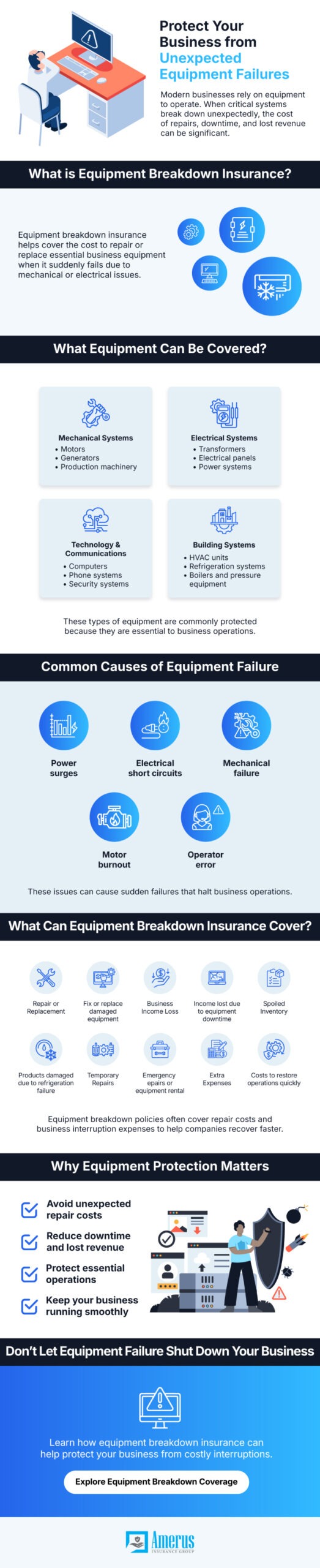
What Is Equipment Breakdown Insurance and Why Is It Essential for Businesses?
Equipment breakdown insurance is a specialized commercial policy that reimburses repair or replacement costs when internal mechanical, electrical, or pressure systems fail, and it also addresses related business interruption and spoilage losses. The mechanism works by covering sudden and accidental failures originating from within equipment components—such as motor burnout, control-board failure, or pressure vessel rupture—rather than external perils like fire or weather. The primary benefit is financial continuity: businesses avoid bearing the full cost of emergency repairs, replacement capital expenditures, and lost income during repairs. This protection is particularly essential for operations with high-value or mission-critical assets where downtime directly reduces revenue or threatens perishable inventory. Understanding typical coverages and exclusions helps organizations prioritize assets for coverage and structure indemnity periods that reflect recovery timelines.
Businesses gain immediate operational resilience from this coverage through three main benefits:
- Rapid repair or replacement funding that reduces out-of-pocket capital expenditures.
- Business interruption and extra expense reimbursement that preserves cash flow during downtime.
- Spoilage and contamination protection for perishable stock linked to equipment failure.
These benefits make it clear why equipment breakdown insurance is integral to continuity planning; the next section details precisely what equipment and perils are commonly covered.
What Does Equipment Breakdown Insurance Cover?
Equipment breakdown insurance commonly covers boilers and pressure vessels, mechanical machinery such as motors and drives, electrical systems including transformers and switchgear, HVAC units and refrigeration systems, and computer/communications equipment like servers and network racks. Coverage responds to internal perils—mechanical failure, electrical short-circuit, power surge damage to internal components, and pressure-related ruptures—that standard commercial property policies often exclude. An insurer’s typical response includes payment for on-site repair, replacement of damaged parts, testing and inspection costs, and in many forms, temporary rental equipment to limit downtime. Real-world examples include a production motor bearing failure that halts a line and a refrigeration compressor burnout that causes inventory spoilage; in each case, insured repair costs and spoilage claims reduce the business’s net loss.
This table clarifies covered equipment, common failure types, and typical insurer responses.
This table demonstrates how equipment categories align to perils and insurer actions, helping risk managers identify priority assets for coverage. The following subsection explains how these coverages link directly to business interruption protection.
How Does Equipment Breakdown Insurance Protect Against Business Interruption?
Equipment breakdown insurance protects against business interruption by reimbursing lost income and reasonable extra expenses that result from a covered equipment failure during the policy’s indemnity period. Mechanically, the policy ties the interruption to a covered breakdown event and calculates loss based on historical revenue and reasonable projections adjusted for the interruption period; extra expense coverage pays for actions taken to reduce downtime such as renting temporary equipment or expedited repairs. For example, a restaurant experiencing refrigeration compressor failure may claim spoilage for perished inventory and business interruption for lost sales while the unit is repaired; insurer payments for both elements preserve working capital and customer relationships. Limits, waiting periods, and the length of the indemnity period vary, so documenting pre-loss revenue and maintaining clear records of mitigation costs are critical to claim success.
Unexpected interruptions can significantly impact small businesses, making it essential to plan for income loss and operational disruptions caused by equipment failure or other unforeseen events.
U.S. Small Business Administration — Emergency preparedness and business continuity planning .
Understanding these mechanisms clarifies why businesses should align indemnity periods with realistic recovery timelines; next we catalog which specific equipment classes benefit most from breakdown protection.
Which Types of Equipment Are Covered by Equipment Breakdown Insurance?
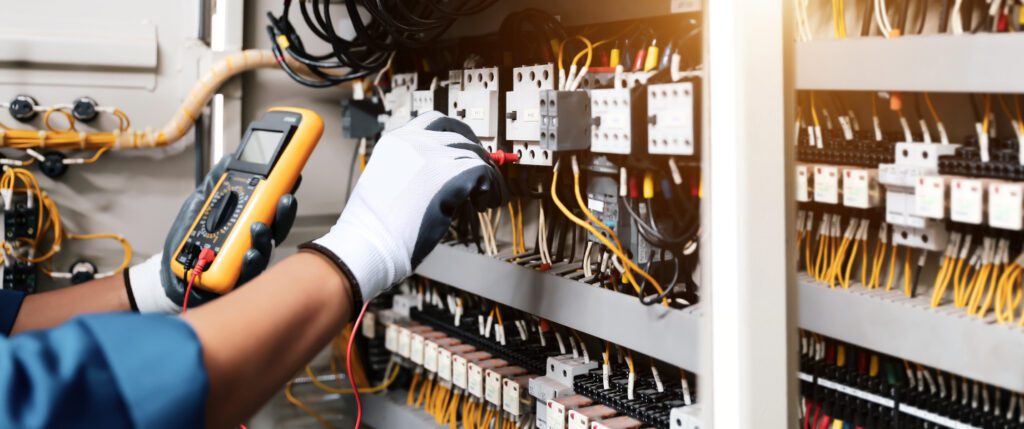
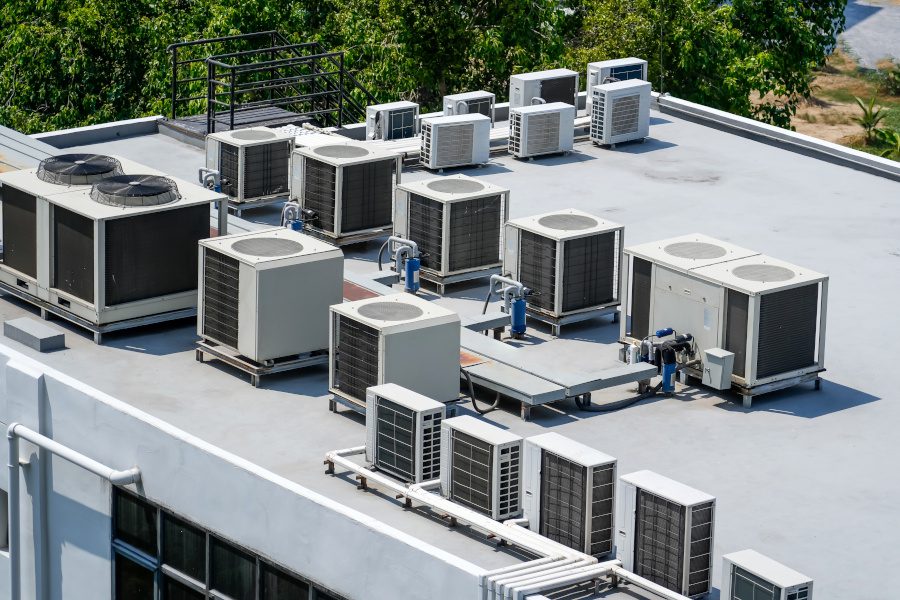
Equipment breakdown insurance typically covers mechanical systems, electrical equipment, pressure vessels, computer and communications equipment, and HVAC and refrigeration units—each requiring tailored limit and endorsement choices depending on criticality and replacement cost. The policy’s hyponyms illustrate specific subtypes: Boiler and Pressure Vessel Coverage for steam and hot-water systems, Mechanical Breakdown Coverage for production machinery, Electrical Equipment Insurance for transformers and switchgear, Computer and Communications Equipment Insurance for servers and control systems, and Spoilage Coverage for perishable inventory tied to refrigeration failures. These meronyms—HVAC systems, boilers, motors and drives, control panels, refrigeration units, and servers—represent parts of a larger risk picture and help underwriters and risk managers quantify exposure. Coverage conditions often hinge on age, maintenance history, and protective systems such as surge protection and redundancy, so clear inventories and maintenance logs improve insurability and may reduce premiums.
A practical list identifies typical asset categories businesses should inventory for underwriting.
- Mechanical production equipment (motors, conveyors, pumps)
- Thermal systems and pressure vessels (boilers, autoclaves)
- Electrical infrastructure (transformers, switchgear, control panels)
- HVAC and refrigeration units (compressors, condensers, racks)
- Computer and communications hardware (servers, routers, UPS systems)
Maintaining a prioritized asset register speeds risk assessments and supports underwriting reviews; the following subsections explain mechanical and electrical/HVAC nuances that often determine how coverage applies.
How Does Mechanical Breakdown Coverage Safeguard Business Machinery?
Mechanical breakdown coverage safeguards machinery by covering sudden internal failures—worn bearings, gear failures, shaft misalignment, and catastrophic component fatigue—that interrupt production or service delivery. The insurance typically distinguishes repair versus replacement decisions based on the cost-effectiveness of restoring the unit and may cover diagnostic testing and temporary rental equipment to reduce downtime. The underwriting lens often evaluates failure modes, historical maintenance programs, redundancy practices, and availability of spare parts; proactive predictive maintenance and documented service contracts are meritorious in underwriting. In practice, a manufacturer facing a gearbox failure on a production line benefits from prompt payment for repair work and compensatory business interruption coverage that offsets the revenue loss during repair, enabling continuity while avoiding unplanned capital expenditure.
These considerations lead naturally into electrical and HVAC coverage details, where power quality and refrigeration spoilage are frequent drivers of claims.
What Electrical Systems and HVAC Equipment Are Included?

Electrical systems and HVAC equipment commonly included under breakdown policies span transformers, switchgear, distribution panels, motors, control systems, air handlers, chillers, and commercial refrigeration units. Power surge protection and UPS systems are closely related entities because power-quality events can cascade into equipment damage; therefore, policies often require or favor installed surge mitigation for large electrical exposures. Refrigeration units create an explicit connection to spoilage coverage: when perishable inventory is lost due to compressor failure or refrigerant loss, insurers may pay for both equipment repair and spoiled stock replacement. Exclusions can include design flaws or wear-and-tear avoidable through reasonable maintenance, so documenting routine servicing and protective devices strengthens claims positions and may reduce premium impact.
Next we contrast equipment breakdown with commercial property insurance to clarify gaps and complementarity.
How Does Equipment Breakdown Insurance Differ from Commercial Property Insurance?
Equipment breakdown insurance differs from commercial property insurance primarily by covering internal mechanical and electrical failures originating within equipment, whereas commercial property focuses on external perils—fire, lightning, wind, and theft. In mechanism terms, equipment breakdown triggers on sudden internal malfunction of covered machinery or systems; property insurance triggers on external damaging events that affect the building or contents. This division creates practical gaps: a transformer that fails internally may be covered by breakdown insurance but not by a standard property policy; conversely, a fire that damages property and equipment would be handled under property coverage. Combining both coverages with appropriate endorsements provides a more complete risk transfer strategy that aligns with operational continuity objectives.
A mini-table below highlights key differences across coverage aspects to make comparison clear.
This side-by-side view helps risk managers identify potential coverage gaps. The following subsection details specific claim examples and how these policies complement one another for full protection.
What Are the Key Differences Between Equipment Breakdown and Property Insurance?
Key differences center on covered perils, policy triggers, and typical claim examples: equipment breakdown addresses internal failures such as motor burnout, control-board failure, or pressure vessel rupture, while property insurance handles losses from fire, wind, and water intrusion. Practical examples clarify the separation: a refrigeration compressor burning out from internal failure is likely an equipment breakdown claim, whereas a roof collapse from a storm damaging the compressor would usually ride on property coverage. Policy forms differ structurally—breakdown forms include testing, expediting expenses, and spoilage sub-limits—so understanding each contract’s trigger language and exclusions is crucial. This understanding enables risk managers to request targeted endorsements and to align indemnity periods and sublimits to operational recovery needs.
Resolving these differences leads to a recommended layering approach that avoids gaps and duplications, explained in the next subsection.
How Do These Coverages Complement Each Other for Complete Protection?
Equipment breakdown insurance and commercial property insurance complement each other by addressing distinct but related loss vectors, and layering them reduces the chance of uncovered events that interrupt operations. A practical checklist for layering includes ensuring breakdown limits match replacement cost exposure for critical assets, setting business interruption indemnity periods that reflect realistic recovery timelines, and confirming spoilage sublimits for perishable inventories. Recommended pairings vary by industry—for example, manufacturers benefit from high mechanical limits plus extended business interruption, while food service operations require robust refrigeration and spoilage coverages paired with property protection. Regular policy reviews and scenario-based loss modeling help identify remaining gaps and guide limit adjustments.
This coverage layering perspective points to the next logical question: what factors influence the cost and benefits of adding equipment breakdown protection?
What Factors Affect the Cost and Benefits of Equipment Breakdown Insurance?
Premiums and net benefits for equipment breakdown insurance are driven by equipment age, maintenance program quality, industry risk profile, redundancy and spare-part strategies, and chosen limits and deductibles. Underwriting reasons are straightforward: newer well-maintained equipment with documented service contracts and monitoring systems presents lower failure probability, thus lower risk; conversely, high-utilization or mission-critical environments with single points of failure command higher premiums or stricter conditions. The financial benefit side captures avoided repair capital, reimbursed lost income, and lower reputational or supply-chain disruption costs—together these establish an ROI that often justifies coverage. Risk management actions such as predictive maintenance, IoT-enabled monitoring, and power surge protection demonstrably reduce claim frequency and severity, which in turn can lower insured cost.
Below is a concise EAV-style table that shows how key variables influence premiums.
This table helps risk managers prioritize interventions that reduce premium pressure. The next subsection outlines specific premium drivers and documentation businesses should prepare.
Which Premium Factors Influence Equipment Breakdown Insurance Rates?
Underwriters focus on equipment specifications, operational intensity, redundancy, historical claims, and maintenance records when determining rates; these factors explain the risk of sudden internal failure. Specific documentation that influences pricing includes a current equipment inventory with serial numbers and ages, recent maintenance and inspection logs, details of surge protection and monitoring systems, and records of spare-part availability or redundancy. Businesses can reduce premium by staging risk-reduction measures such as service contracts with licensed technicians, installing protective devices, and implementing predictive maintenance tools that detect degrading performance. Preparing this information in advance shortens quoting timelines and improves quote accuracy, allowing owners to weigh premium costs against expected financial benefits.
This underwriting focus naturally leads into a discussion of the quantifiable financial benefits of carrying coverage, explored next.
What Financial Benefits Does Equipment Breakdown Insurance Provide?
Equipment breakdown insurance delivers measurable financial benefits: it covers repair or replacement costs that would otherwise hit capital budgets, reimburses lost income and extra expense allowing operations to continue, and protects balance sheets from unplanned write-offs and reputational loss. For example, replacing an industrial chiller might cost a business tens of thousands in capital outlay and create weeks of lost production; insured repair and business interruption payments can instead preserve liquidity and customer commitments. Indirect benefits include improved supplier and lender confidence because insured continuity reduces counterparty exposure, and the ability to pursue calculated capital planning rather than emergency spending. Comparing uninsured loss scenarios versus insured outcomes often shows a strong ROI once lost income and extra expense are quantified against annual premium cost.
Businesses can often deduct insurance premiums as ordinary and necessary business expenses, reducing overall taxable income and improving the net financial benefit of carrying coverage.
Internal Revenue Service — Deducting Business Expenses (IRS Guidelines) ; Business expense deduction guidelines.
These financial considerations make industry-specific applications particularly relevant, which the next section examines.
How Is Equipment Breakdown Insurance Applied Across Different Industries?
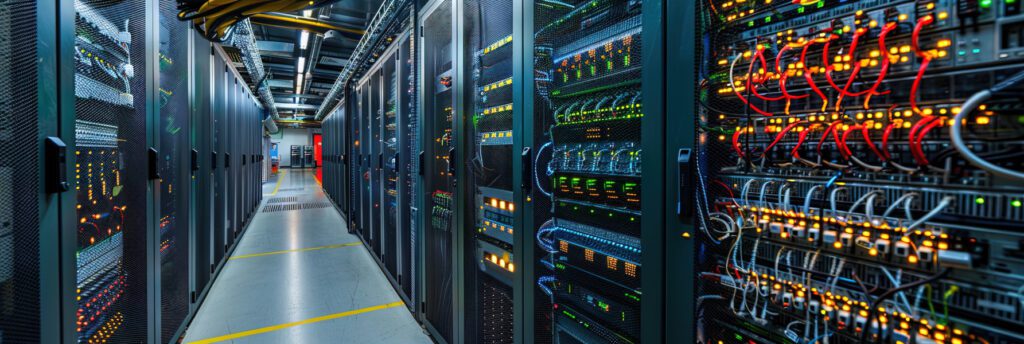
Equipment breakdown insurance is tailored by industry to reflect differing asset profiles, financial impacts of downtime, and regulatory or safety considerations; manufacturing, healthcare, food service, data centers, and retail each prioritize different endorsements and indemnity structures. In manufacturing, high-value production machinery and line stoppage consequences drive demand for high mechanical limits and business interruption indemnity. Healthcare facilities prioritize medical device coverage and fast repair turnarounds because patient care and regulatory compliance are at stake. Food service and grocery operators focus on refrigeration and spoilage protections due to inventory perishability. Data centers emphasize server, UPS, and power distribution coverage, along with rapid-expense provisions for emergency power and data recovery. Matching policy features to sector-specific failure scenarios reduces operational risk and supports continuity planning.
After illustrating sector use-cases, it is worth noting that Amerus Insurance Group can coordinate coverage across a client’s portfolio and offer personalized industry-specific solutions. To provide comprehensive insurance and financial solutions, simplify the process, and guide clients to secure their financial future through personalized advice and tailored plans. This combined approach helps businesses align technical insurance mechanics with practical recovery plans.
How Does Equipment Breakdown Insurance Support Manufacturing and Production Facilities?
For manufacturers, equipment breakdown insurance addresses high-cost machinery failures, tooling losses, and production stoppages that directly affect output and delivery commitments. Coverage typically includes repair and replacement for key line equipment, expedited shipping of replacement parts, and business interruption based on production schedules that reflect actual lost output. A sample scenario: an unplanned gearbox failure halts a bottling line; insured extra expense coverage funds temporary rental equipment and overtime to restore throughput faster while business interruption compensates lost sales for the indemnity period. Policy customization for manufacturers often includes higher limits for mechanical equipment, specified sub-limits for expedited repairs, and endorsements for loss-of-income calculations based on production metrics.
These manufacturing priorities segue into the specific needs of healthcare and food service operators where patient safety and spoilage are dominant concerns.
What Coverage Do Healthcare and Food Service Businesses Need?
Healthcare and food service businesses require targeted coverage for critical devices and perishable inventories: medical imaging devices, sterilization equipment, refrigerators and freezers, and HVAC systems that maintain clinical environments. In healthcare, failures can affect patient safety and regulatory compliance, so coverage should include rapid-response repair, replacement parts, and business interruption tied to service volumes. In food service, refrigeration unit failures create immediate spoilage risk, so spoilage coverage combined with equipment repair limits is essential to protect margins. Documentation requirements often include maintenance records and temperature-logging histories that substantiate loss and help expedite claims payments.
These industry examples underscore the value of advisor-led coordination when assembling tailored coverage; the final section explains how businesses can obtain coverage from a licensed advisor.
How Can Businesses Obtain Equipment Breakdown Insurance from Amerus Insurance Group?

To provide comprehensive insurance and financial solutions, simplify the process, and guide clients to secure their financial future through personalized advice and tailored plans. Our insurance brokerage positions licensed advisors to help businesses navigate equipment inventories, underwriting requirements, and multi-policy coordination to assemble a cohesive protection plan. The typical advisor role includes assessing critical asset exposures, recommending appropriate limits and endorsements, coordinating coverage across commercial property and business interruption policies, and helping prepare documentation that accelerates quoting and binding.
Early advisor involvement ensures underwriting questions are anticipated and that coverage aligns with operational recovery priorities.
Below is a clear, practical process businesses can follow to obtain a quote and bind coverage with an advisor.
- Prepare an equipment inventory, including ages and serial numbers, and compile recent maintenance records.
- Schedule an initial consultation for risk assessment and to discuss indemnity periods, limits, and endorsements.
- Receive tailored quotes and compare options for limits, deductibles, and business interruption structures.
- Select coverage, finalize documentation, and bind the policy with agreed terms and scheduled reviews.
This stepwise process clarifies what to expect; the next subsections expand on documents and how Amerus advisors personalize coverage.
What Is the Process to Get a Quote for Equipment Breakdown Insurance?
Getting an accurate quote typically starts with an initial consultation that identifies critical assets and operational priorities, followed by submission of a detailed equipment inventory and maintenance history to underwriters. Underwriting timelines vary, but businesses can usually expect a preliminary quote within days if documentation is complete; complex exposures may require site inspection or supplemental engineering reports. Documents that speed the process include maintenance contracts, service logs, equipment manufacturer specifications, recent loss history, and production or revenue metrics for business interruption calculations. Asking advisors targeted questions—about indemnity period options, spoilage sublimits, and expediting expense provisions—ensures quotes align with recovery needs and avoids surprises at claim time.
Preparing these items streamlines comparison among insurers and helps advisors recommend the best combination of limits and endorsements for the business.
How Do Amerus Insurance Group’s Licensed Advisors Personalize Equipment Breakdown Coverage?
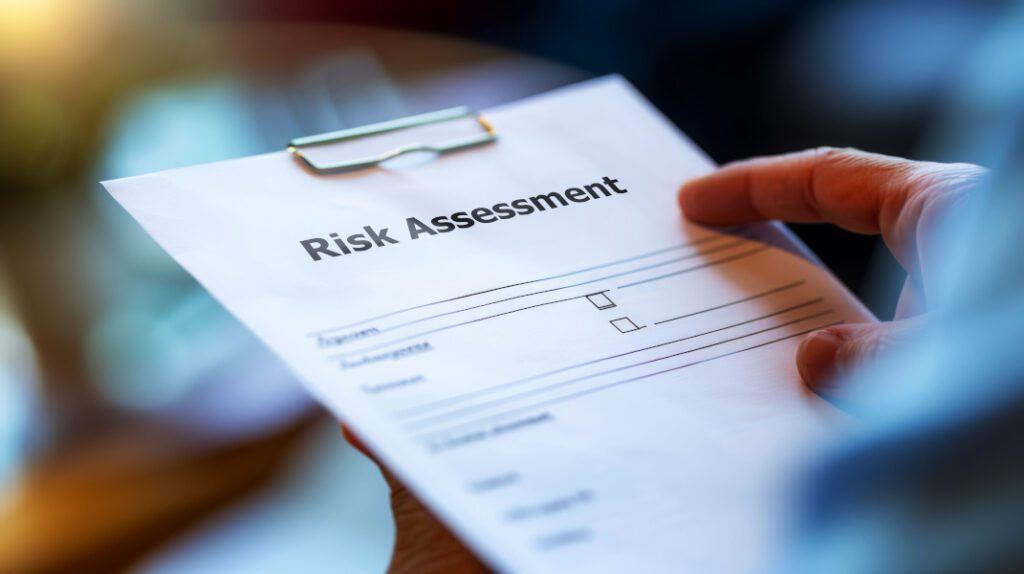
Amerus Insurance Group’s licensed advisors perform a structured risk assessment that evaluates asset criticality, failure modes, and recovery timelines, then tailor policy language and limits to those findings while coordinating coverage across a client’s broader commercial portfolio. Advisors review maintenance programs, recommend practical risk reduction measures, and suggest endorsements that align limits with replacement-cost realities; they also advocate for policy features like expediting expenses and spoilage protection when appropriate. As a Lead Generation and Information Hub, Amerus advisors help businesses weigh the cost-benefit of coverage choices and facilitate timely quotes from carriers, while recommending periodic reviews to adjust for asset additions or operational changes.
This consultative process preserves operational continuity and aligns insurance spending with strategic resilience goals.
These steps complete the practical guidance on obtaining and customizing equipment breakdown insurance to match your business needs.
Frequently Asked Questions – Equipment Breakdown Insurance
Equipment breakdown insurance is a commercial policy that helps protect your business from unexpected mechanical, electrical, or pressure system failures.
It covers repair or replacement costs and may also include lost income and extra expenses caused by equipment downtime.
Coverage typically includes HVAC systems, electrical panels, refrigeration units, boilers, compressors, and production machinery.
Many policies also extend to computers, communication systems, and other essential business equipment depending on your coverage selection.
Businesses that rely heavily on equipment—such as manufacturing, restaurants, healthcare facilities, data centers, and retail operations—benefit the most.
Any business where downtime can disrupt revenue, operations, or customer service should strongly consider this coverage.
In most cases, no. Standard commercial property insurance typically excludes internal mechanical and electrical failures.
Equipment breakdown insurance is designed specifically to fill this gap and cover sudden system failures.
It can help cover repair or replacement costs, business income loss during downtime, and additional expenses such as temporary equipment rentals.
This helps businesses recover faster and reduces the financial impact of unexpected failures.
You can get a quote by contacting a licensed insurance agent or requesting estimates online from commercial insurance providers.
You’ll typically need details about your business operations, equipment types, and desired coverage limits to receive an accurate quote.
Costs vary based on your industry, equipment value, location, and coverage limits.
Businesses with expensive or high-risk equipment may pay more, but the coverage is often cost-effective compared to potential repair and downtime losses.
Most policies exclude normal wear and tear, poor maintenance, intentional damage, and external events like floods or earthquakes.
Reviewing policy exclusions is important before purchasing to understand exactly what is and isn’t covered.
To file a claim, contact your insurance provider as soon as the breakdown occurs and provide details such as the damaged equipment, cause of failure, and estimated repair costs.
An adjuster will typically review the claim and guide you through repair or replacement reimbursement steps.
Yes, especially for small businesses that depend on critical equipment to operate daily.
Even a single breakdown can lead to costly downtime, making this coverage a practical and often affordable risk management solution.