
Your Ultimate Florida Auto Insurance Guide for Smart Drivers: Understanding Rates, Requirements, and Savings
Auto insurance in Florida can be complex due to state-specific rules. This guide clarifies rates, legal obligations, and practical ways to save so drivers can protect themselves and their assets while staying compliant. We outline factors that affect premiums, required minimum coverages, and strategies to lower costs, helping you make informed insurance decisions.
Key Takeaways
- Florida auto insurance rates depend on driving history, vehicle type, location, and chosen coverage options.
- Florida requires Personal Injury Protection and Property Damage Liability as minimum auto insurance coverage.
- The no-fault insurance law mandates PIP coverage to pay medical expenses regardless of fault in accidents.
- High uninsured motorist rates and insurance fraud contribute significantly to Florida’s elevated auto insurance costs.
- Drivers can reduce premiums through discounts like multi-policy, safe driver, low mileage, and good student programs.
- Independent insurance brokers help compare multiple providers to find competitive Florida auto insurance rates and coverage.
- Effective quote comparison involves gathering multiple standardized quotes and using online comparison tools.
- Filing a Florida auto insurance claim requires prompt reporting, thorough documentation, and adherence to state regulations.
Understanding Insurance Rates
Multiple factors determine insurance premiums in Florida. These include the vehicle type, the driver’s record, and the coverages selected. A clean driving history typically reduces premiums, while accidents or violations increase them. Chosen coverage levels—liability, collision, comprehensive—also affect overall cost. Recognising these drivers of price helps you choose the most appropriate policy.
Several systemic issues also increase the cost of auto insurance across the state.
Why Florida Auto Insurance Costs Are High: Uninsured Motorists and Fraud
Florida’s high automobile insurance costs stem largely from road safety concerns, a high rate of uninsured motorists, and the prevalence of insurance fraud.
Best Practices for Automobile Insurance in Florida, L Powell, 2025
What Factors Influence Florida Car Insurance Rates?

Key factors that affect car insurance rates in Florida include:
- Driving Record: A clean driving history can lead to lower premiums, while accidents or violations can increase costs.
- Vehicle Type: The make and model of the vehicle can affect insurance rates, with more expensive or high-performance cars typically costing more to insure.
- Location: Areas with higher crime rates or accident frequencies may see increased insurance costs.
Understanding these factors enables drivers to take informed steps that may lower their premiums.
Legal Requirements
Florida law specifies minimum auto insurance coverages that drivers must carry to operate a vehicle legally. Complying with these requirements helps avoid penalties and ensures financial protection after an accident.
What Are the Florida Minimum Auto Insurance Requirements?
In Florida, the minimum required auto coverages include:
- Personal Injury Protection (PIP): $10,000 coverage for medical expenses.
- Property Damage Liability (PDL): $10,000 coverage for damage to others’ property.
These minimums provide basic protection for drivers and others involved in collisions.
Changes to these minimum requirements could have significant financial implications for drivers.
Florida Auto Insurance Minimum Limits and SR-22 Requirements
If Florida raises minimum auto insurance limits, liability minimums and required SR-22 coverage for high-risk drivers would also increase, which would likely raise insurance costs. Best Practices for Automobile Insurance in Florida
Which Coverage Types Are Legally Required in Florida?
The legally required coverages in Florida include Personal Injury Protection (PIP) and Property Damage Liability (PDL).
- Personal Injury Protection (PIP): Covers medical expenses for the policyholder and passengers, regardless of fault.
- Property Damage Liability (PDL): Covers damages to another person’s property in the event of an accident.
These requirements ensure drivers maintain a baseline of financial protection while on the road.
How Does Florida’s No-Fault Insurance Law Affect Drivers?
Florida’s no-fault law requires drivers to carry PIP coverage, which pays for medical expenses regardless of fault. The intent is to reduce litigation and provide faster access to medical compensation. PIP, however, may not cover vehicle damage or full liability for others; drivers should consider additional coverages to address those exposures.
The no-fault system establishes specific limits for recovery of medical expenses through PIP.
Florida No-Fault Benefits: PIP and Liability Coverage Explained
A typical PIP claimant may recover up to $5,000 in no-fault benefits on a first-party insurance policy, either under bodily injury liability coverage, PIP, or medical payments coverage, as appropriate to the circumstances. How No Fault Is Working in Florida, 1973
Potential Savings Opportunities
Reducing premiums is a priority for many Florida drivers. Several proven strategies can lower costs while maintaining appropriate protection.
What Discounts and Savings Are Available for Florida Drivers?
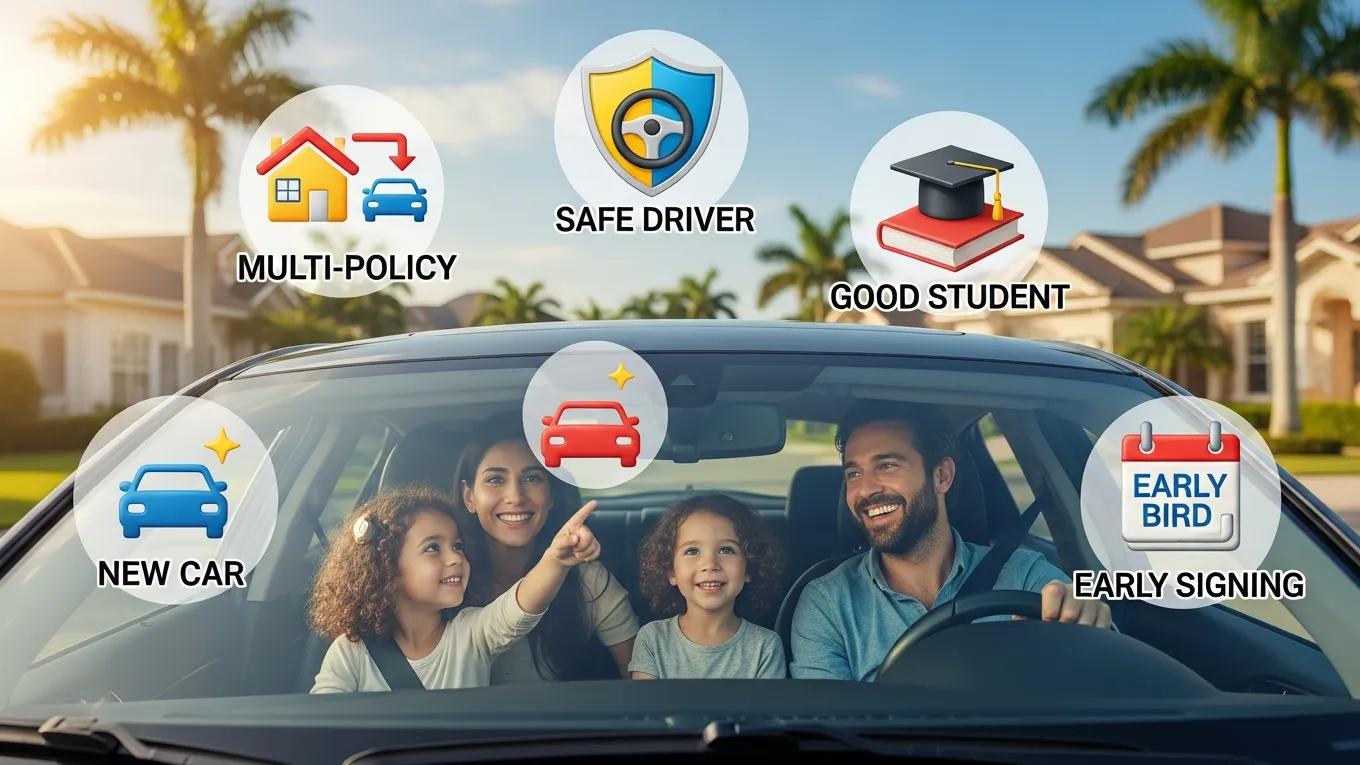
Florida drivers may qualify for a range of discounts, including:
- Multi-Policy Discounts: Bundling auto insurance with other types of insurance, such as home or renters insurance, can lead to significant savings.
- Safe Driver Discounts: Maintaining a clean driving record can qualify drivers for discounts.
- Low Mileage Discounts: Drivers who use their vehicles less frequently may be eligible for lower rates.
These discounts can materially reduce total insurance costs and improve affordability.
Which Common Discounts Can Lower Your Florida Auto Insurance Costs?
Common discounts that may lower auto insurance costs in Florida include:
- Good Student Discounts: Young drivers who maintain a certain GPA may qualify for discounts.
- Safety Feature Discounts: Vehicles equipped with advanced safety features may be eligible for lower premiums.
- Payment Method Discounts: Choosing to pay premiums in full or setting up automatic payments can sometimes lead to savings.
Exploring these options can make insurance more budget-friendly for many drivers.
How Can Independent Insurance Brokers Help You Save?
Amerus Insurance Group assist clients by comparing policies across multiple insurers, identifying appropriate coverage, and negotiating competitive rates. Their market access and expertise can produce savings for drivers who lack time or familiarity to shop the market themselves.
How Can You Compare Florida Auto Insurance Quotes Effectively?
Comparing quotes is essential to obtain suitable coverage at a competitive price. Use a consistent approach when reviewing offers to ensure accurate comparisons.
- Gather Multiple Quotes: Obtain quotes from several insurance providers to understand the market rates.
- Standardize Comparisons: Ensure that the quotes are for the same coverage levels and deductibles to make accurate comparisons.
- Use Comparison Platforms: Online tools can help streamline the process of comparing quotes from different insurers.
Following these steps helps drivers select coverage that balances protection and cost.
How Do You File an Auto Insurance Claim in Florida?

Filing a claim in Florida requires a clear sequence of actions to ensure the process proceeds efficiently.
What Are the Step-by-Step Procedures for Filing a Claim?
- Report the Accident: Notify your insurance company as soon as possible after an accident occurs.
- Document the Incident: Gather evidence, including photos of the scene, witness statements, and police reports.
- Submit the Claim: Complete the necessary claim forms and submit them to your insurance provider along with any supporting documentation.
Adhering to these steps can expedite the claims process and support recovery of the compensation to which you are entitled.
What Should You Know About Florida’s Claims Regulations?
Florida’s claims regulations include deadlines for filing and specific documentation requirements. Claimants must observe these rules to avoid delays.
- Time Limits: There are deadlines for filing claims, which can vary based on the type of claim.
- Documentation Requirements: Insurers may require specific documentation to process claims, including proof of loss and medical records.
Familiarity with these regulations helps drivers navigate the claims process more effectively and avoid common pitfalls.
| Discount Type | Description | Potential Savings |
|---|---|---|
| Multi-Policy | Bundling auto with home insurance | Up to 25% |
| Safe Driver | For maintaining a clean driving record | Up to 20% |
| Good Student | For students with good academic performance | Up to 15% |
The table demonstrates how targeted discounts can produce meaningful savings on premiums for Florida drivers.
Understanding Florida’s auto insurance landscape helps drivers comply with legal requirements while optimising coverage and savings. Explore discounts, confirm minimum coverages, and compare quotes to manage costs more effectively.
Conclusion
Knowledge of Florida’s auto insurance framework empowers drivers to make informed choices that satisfy legal requirements and improve financial protection. Use available discounts, confirm minimum coverages, and compare quotes to reduce costs and optimise your policy. This guide offers practical steps to start improving your insurance decisions.
Frequently Asked Auto Insurance Questions
If you cannot afford minimum coverage, explore state-supported programs or low-income assistance options where available. You can also ask insurers about flexible payment plans, compare quotes from multiple providers, and consider raising your deductible to reduce premiums—just make sure you can afford the deductible if you need to file a claim.
Improving your driving record starts with obeying traffic laws, avoiding accidents, and maintaining safe driving habits. Taking a defensive driving course may also help you qualify for discounts. Over time, a clean driving history can significantly reduce your insurance premiums.
Driving without insurance in Florida can lead to fines, license suspension, and required filings such as an SR-22. First offenses may result in fines up to $500, while repeat violations can bring harsher penalties and longer suspensions. Maintaining at least the required minimum coverage helps you avoid these consequences.
Yes, high-risk drivers are often required to file an SR-22 to prove they carry the state’s minimum insurance coverage. This requirement typically lasts for a set period and can increase premiums. Working with an insurance agent can help you find compliant and affordable coverage.
To ensure adequate coverage, evaluate your vehicle’s value, how often you drive, and your financial situation. Comprehensive and collision coverage are recommended for newer or higher-value vehicles. Review your liability limits to match your assets and consider speaking with an agent to tailor your policy.
If your claim is denied, review the denial letter carefully to understand the reason. Gather any supporting documents and contact your insurer to request a reconsideration or file an appeal. If the issue remains unresolved, you can contact your state’s insurance department or seek legal advice.
Yes, most insurance providers offer same-day coverage. After selecting a policy and completing your application, your coverage can begin immediately, and you’ll receive instant proof of insurance so you can legally drive right away.
The fastest way to compare quotes is by using an online comparison tool or working with an independent agent. By entering basic information, you can view multiple offers side by side and choose the best combination of price and coverage.
Common discounts include safe driver discounts, multi-policy bundling, good student discounts, low mileage savings, and vehicle safety feature discounts. Ask your insurer about all available options to maximize your savings.
Yes, you can switch providers at any time. Just make sure your new policy starts before canceling your current one to avoid any lapse in coverage. Many drivers switch when they find better rates or improved coverage options.
To get a quote, you typically need your driver’s license, vehicle details (such as VIN and registration), driving history, and current insurance information. Having this ready speeds up the process and improves quote accuracy.
The best way to get the lowest rate is to compare multiple insurance providers, apply available discounts, and adjust your coverage and deductible to fit your budget. Shopping around regularly ensures you’re always getting competitive pricing.